

Scarcity Was Engineered
What I Learned From A Dwarf Plantain Tree

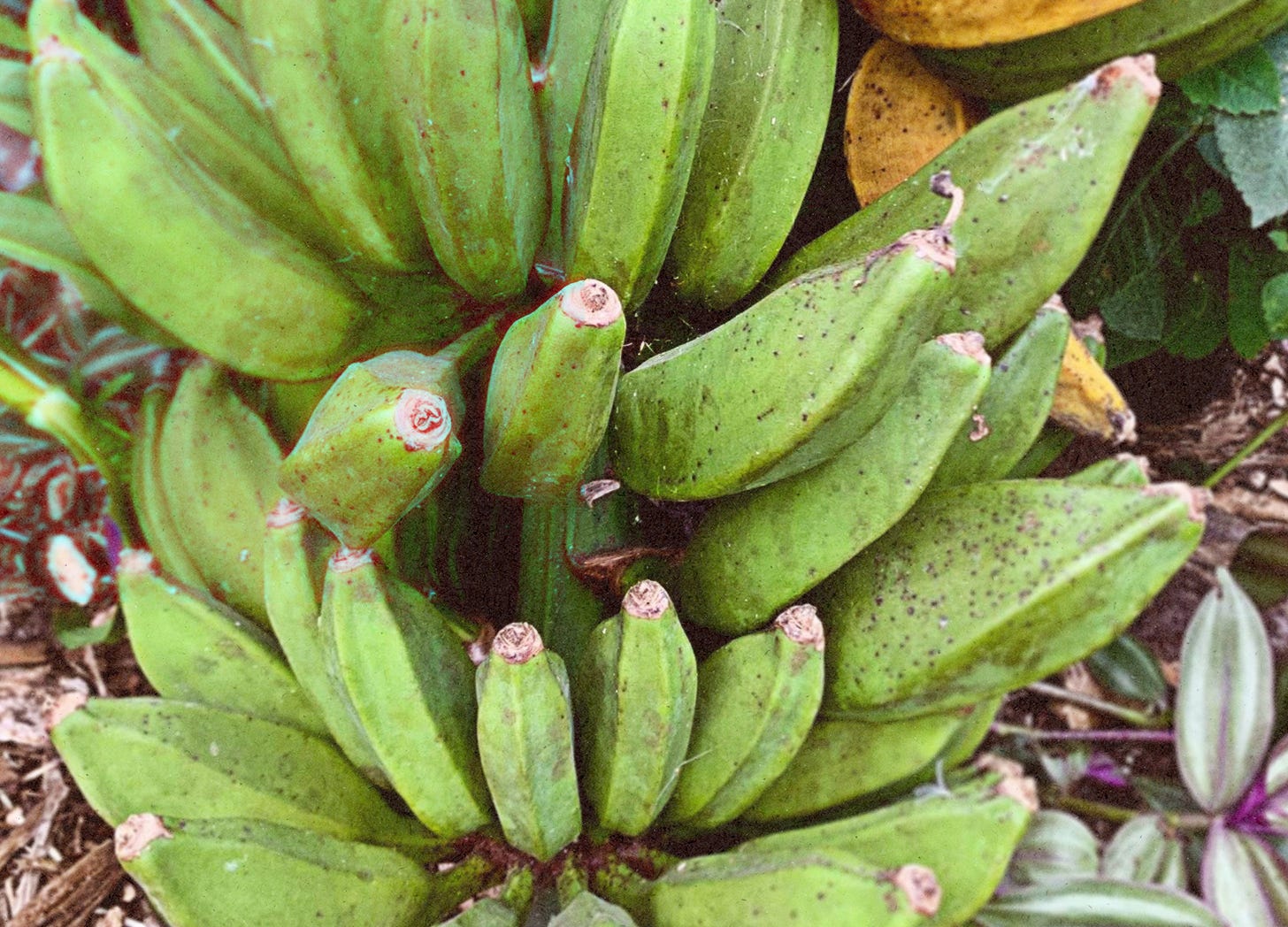
We started with one dwarf plantain tree.
We picked a spot, put it in the ground, and waited. That first year it gave us one rack of fruit. With six people in the house we ate plantains for two days straight and savored every bite. We earned it, a whole year of patience for two days of eating. And it felt like a perfect equation.
By the second year we had six or seven trees. Two full racks came in at the same time, which means about forty plantains sitting on the counter top ripening at the same time, because that’s what they do. Once you cut the fruit off, the whole thing ripens together and they don’t wait for you to figure it out.
We fried some the first night. Baked some the next day. By day three we were looking at each other like, this is a lot of food. A few of the stragglers got overripe before we could get to them. And that’s how we found out chickens love plantains
The third year we had ten trees. Multiple racks waiting to be harvested. And I remember standing in the yard doing the math in my head and realizing we have way more than we need.
That realization changed my brain chemistry forever.
I immediately started moving plantains. Showed up to a friend’s BBQ with a rack over my shoulder. Handed a few bunches to the drummer at a reggae show. Knocked on a neighbor’s door. Brought some to co-workers. Knowing how short the shelf life was kept me motivated to find more people to off load to.
The deepest thing that occurred to me was that it never crossed my mind to sell them. I didn’t think about trading, I didn’t calculate what they were worth or what I could get in return. The abundance made all of that feel like it was beside the point. The only thing that felt natural was to get them to the people who would enjoy them before they rot.
That experience taught me everything.
I’ve thought about that a lot, and this is what I understand now: abundance is harder to monetize than scarcity.
Scarcity creates urgency. Urgency creates demand. Demand creates leverage. The whole idea of the market runs on learning how to manage things that are scarce, whether that scarcity is real or manufactured. If you can control access to something people need, you have power. If everyone has enough, you have don’t have anything to sell.
That’s not a conspiracy. It’s just the logic of the system. But if you follow those rules long enough, something inside you changes. You start to see more of the world through that same lens. You guard what you have. You perform generosity instead of practicing it. You hoard information and ideas as a natural reflex because the whole environment you exist in is organized around scarcity as the default condition.
And the worst part is you stop noticing it. It just becomes the way things are.
Nature does not operate that way.
One sweet potato makes ten to twenty slips. Each slip has the potential to grow three to five pounds of potatoes. That math is almost offensive if you’ve been taught to think small. One watermelon carries five hundred seeds. A plantain tree doesn’t produce one rack and call it a day. It multiplies itself, sends up new shoots, and sets the stage to give you more than you need.
Surplus is not an accident in nature. It’s the design. The default frequency. Overflow and regeneration are part of the system. Nothing is wasted because the “waste” is the point.
Somehow we were taught to look at that and see inefficiency.
What nature is actually showing us is what it looks like to operate without fear of lack.
I sell plants and fruit trees now to help make ends meet. I understand the commerce of it. But to be completely honest, I know that’s not the destination. The destination is what I felt in the yard with ten plantain trees and more fruit than six people could eat. That feeling of who can I give this to, that’s the frequency I’m trying to live in permanently.
I don’t want more so I can have more. I want more so I can give more without that grasping and hoarding reflex that comes with scarcity.
That’s what I want my information to feel like. My writing, my thinking, what I know about the land, none of that registers to me as a finite resource that needs to be guarded.
The more I give away, the better I understand.
When fullness is taken from fullness, fullness still remains - The Isha Upanishad
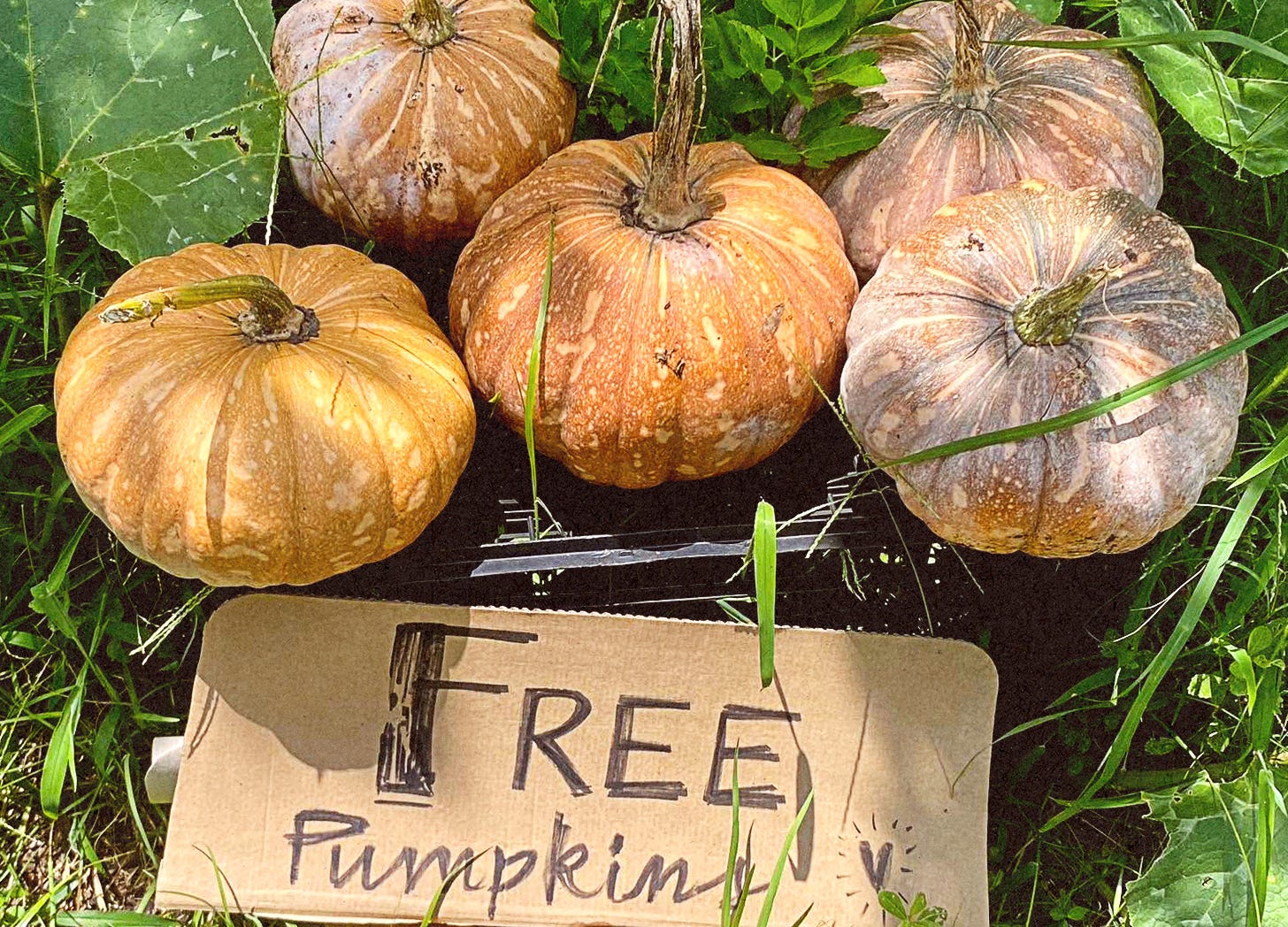
About five years ago we planted a few Seminole pumpkin seeds.
It’s a heat-loving squash native to Florida, so I figured at the very least it would be low maintenance. Turns out it’s also a prolific producer and pretty delicious, which are two qualities that will always get you a spot on this homestead. That first year we harvested a few nice sized gourds and had some great meals. But the the real gift came from the ones we didn’t harvest.
This plant grows fast and it stretches far. It crept under brush and into corners of the yard we don’t visit often. Fruit showed up in places we never thought to look, it ripened before we noticed, it got eaten by birds or squirrels or just rotted right where it was. Which might sound like a loss, but it’s not. That compost feeds the worms and the microorganisms in the soil. And even better, those rotting pumpkins leave seeds.
We haven’t deliberately planted Seminole pumpkin since that first year. But every year since, without tilling, without protecting them from the elements, with no special attention at all, they show up. All of them growing from that one decision.
We’ve never had to think about what they might be worth or whether we planted enough. We’re so far into surplus it doesn’t even matter.
Now when we get invited to dinners or parties it’s not uncommon for us to show up with a few of them in tow. And the part I love most is what we’re really handing people when we do that. They get a meal. They get a condensed version of this story. And they get a bunch of seeds to expand the fractal if they decide to.
I didn’t logic my way into any of this. There was no strategy. When I saw that much surplus coming from that little input, sharing was just the most obvious and rewarding thing to do. The abundance made the decision for me.
That’s the thing about this frequency. Once you witness it in real life, you stop being able to justify the alternative.
Nature didn’t just show me what to do, it showed me a way to be. And I’ll spend the rest of my life learning to apply it to everything else.
The questions isn’t whether or not the abundance is there. It absolutely is. The question is how we learn to trust it enough to let it take root in our lives, and stop operating in this engineered appearance of lack.
Thank you for reading, you are greatly appreciated.
-Corey
This newsletter is free because I practice my kung fu in the front yard.
In other words, I believe in sharing the process, not just the results.
If this found you at the right time, consider becoming a paid subscriber.
Get deeper into the practice with me

I have personally enjoyed one of these Seminole pumpkins- I had just moved back home to Dunedin Florida from a fire drenched Los Angeles - feeling misplaced and nomadic - Corey brought one of these over to my aunt and uncles house. About a month later once it ripened my aunt roasted it with olive oil and orange peel. Made me feel at home / so inspired by you and your family brother. What a blessing to learn from you and your land by proxy.
It is so exciting to hear what you do and what it’s teaching the rest of us through you. A great teacher I knew for only a short time told me:
“Holy people share their food and their knowledge. Beware of anyone who hoards either of these things.”