

The Algorithm Doesn't Reward Meaning, People Do
How to Stop Competing for Attention, and Start Creating Conditions for Connection.

Deep vs Cheap
A lot of creative spaces are in a panic right now.
It’s not loud, it’s subtle. You might miss it if you’re not deep in the conversation with creators, but it’s definitely happening. We’re all hearing that whisper telling us to “post something,” even if we don’t have anything meaningful to say.
The kind of panic that tells you momentum is something you have to chase instead of something you have to build.
We’re not struggling because we don’t have ideas or discipline. We’re just exhausted.
Tired of trying to stay visible in a system that rewards speed more than substance.
So we compromise.
We post faster, crossing that thin line between simplifying and dumbing down. We reach for what’s already proven effective instead of leaning into the new energy that’s trying to emerge.
It works, for a little while.
But that cheap attention disintegrates just as fast as it shows up. And the deep work, the kind that actually changes your life, doesn’t announce itself with a bang.
It starts quiet, and invisible.
This is an essay about choosing depth in a culture optimized for cheap.
Not as a moral stance. As a survival strategy.
What “Cheap” Actually Is
Cheap doesn’t necessarily mean bad. It just means temporary.
Cheap work is built to perform in the moment, not to last. It’s designed to trigger a reaction (likes, shares, comments, and upticks in vanity metrics) without asking too much of the creator or the audience.
There’s nothing wrong with it. We’ve all done it. Sometimes we need it.
Cheap work is what you make when you’re trying to stay visible. When you’re tired of screaming at the void and you need proof that you still exist inside the machine.
It’s the post you know will make an impact. The idea you’ve already seen work for other people. The trend you don’t really care about but understand it well enough to execute.
Cheap is rented attention. Useful, but unstable.
It feels safer because of the relief you get when you switch from long term perspective to short term gratification.
Instead of building around a coherent worldview, you just follow the trends and match the formats.
And trust me, I get it. People are tired, bills are due, bandwidths are thin, and the platforms punish you for taking days off.
The danger isn’t in making the cheap work. The danger is building your whole creative identity on it. Why? because the audience you build with that cheap work will always expect more of the same, that’s how you get trapped.
What “Deep” Actually Means
Deep work isn’t about length. It’s not about being complex for the sake of complexity, or showing off how much you know.
It’s about integration and intent.
Deep is work that could only come from you. Work that carries a perspective, put together in a way that can’t be found anywhere else. It’s the essay that takes three weeks because you’re not just writing, you’re figuring out what you actually think, and feel, in real time.
Deep work has rough edges that often rub some people the wrong way. But it’s not designed to be agreeable, it’s opinionated and people will have objections, and that’s ok. Because ultimately it’s only supposed to be true to the person making it.
The main thing to understand is that deep doesn’t perform worse than cheap, it just performs differently.
Cheap work spikes. Deep work accumulates.
Writing about “5 productivity hacks” might get you 10,000 views in a week. An essay about how you rebuilt your relationship with ambition after burning out might get you 200 views now, and then 50 more next month, and 100 the month after that, because somebody stumbled onto it, or sent it to a friend who needed it.
Deep work becomes a reference point. Cheap work becomes a memory.
The algorithm doesn’t care about you. But it does care about retention. Whether people actually stay, read, watch, revisit. And retention is the purpose of deep work.
When you build cheap, you’re competing with everybody else who’s chasing the same trend at the same time. The algorithm picks a few winners and the rest drown in the noise.
When you build deep, you’re not competing. You’re just trying to say something that hasn’t been said in that particular way yet. And over time, that uniqueness is what makes you discoverable. It’s not because you hacked anything, it’s because you made something that actually holds attention once it finds the people who resonate.
Why the Algorithm Can’t Ignore Depth Forever.
The algorithm is not a genius, It doesn’t have taste, it’s not impressed by your effort, and it doesn’t understand your intention. But it is good at noticing is patterns.
It doesn’t reward meaning, people do.
The algorithm just notices what people build connections with.
This is why choosing depth changes the equation.
Cheap work is like a bright flash in the middle of the night. Spikes of attention that rise and then fall just as fast. They’re loud, but they’re isolated. Every attempt has to succeed on its own.
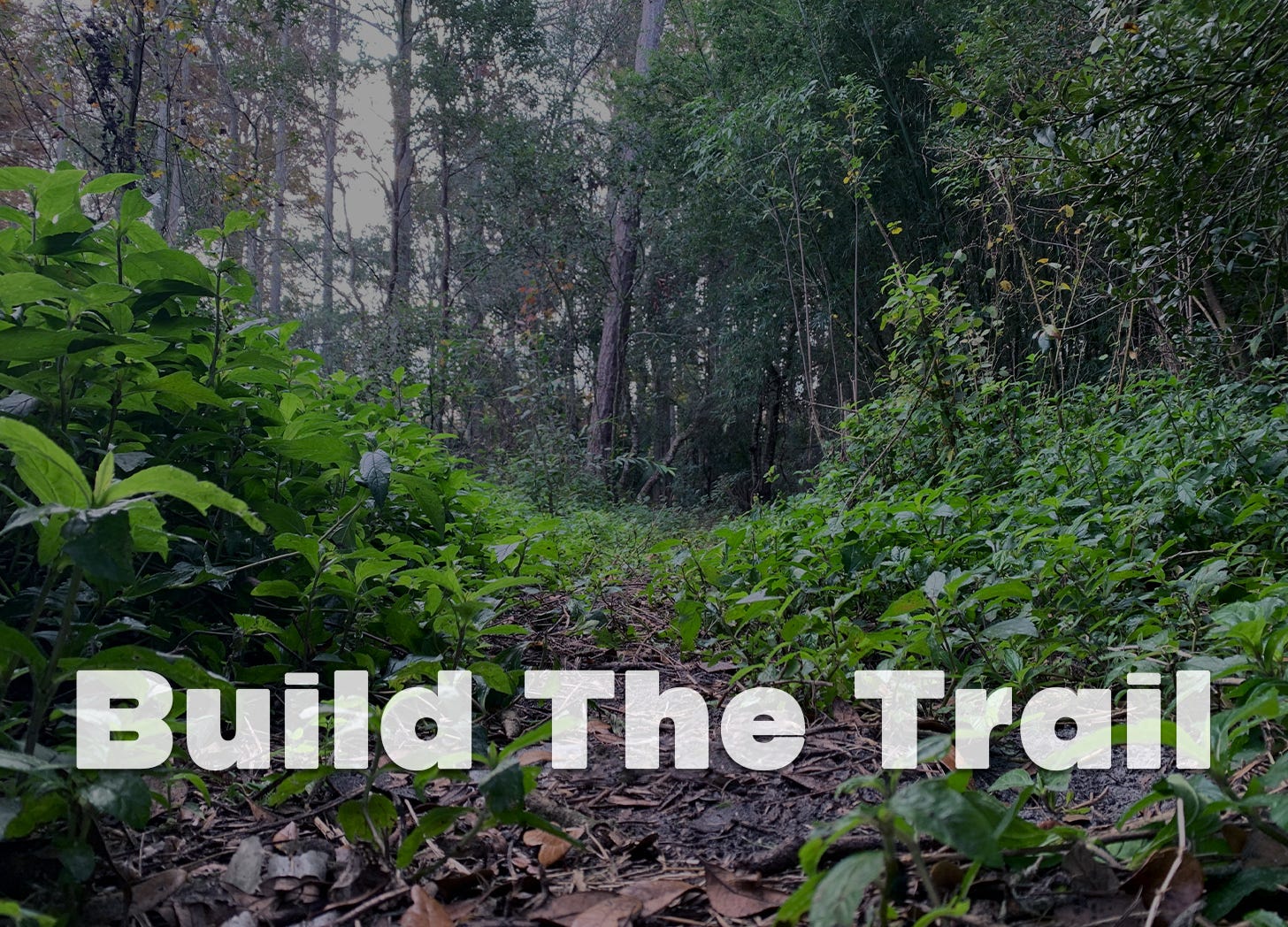
Deep work leaves a trail of breadcrumbs.
Each piece connects to the last, they create context and leave a signal about what might be coming next. You won’t get results overnight. But when people click on your profile, scroll back through older posts, or bookmark things to revisit later, those people remember your name.
Because humans don’t follow flashes.
They follow trails.
Your consistency starts to reveal itself over time. The same values. The same perspective. The same kind of questions being asked from slightly different angles.
That’s the kind of predictability algorithms can’t ignore. The more people interact with your work, the more the system will adjust. It has no other choice, it’s a programmed response.
Finding things that hold attention, and pushing them to the surface is it’s only job.
It doesn’t care if the work is deep or cheap. It doesn’t matter if it’s profound or disposable. It only cares about retention. Are people spending time with it? Are they coming back? Is the engagement coming from genuine interest or doom scrolling?
When you commit to deep work, you can stop fighting the algorithm because you’re creating the condition that forces it to pay attention.
It probably wont explode onto the FYP, but it will make you easier to find, and easier to trust.
Tactics and formats will always change, so shortcuts and exploits won’t last long.
You can’t outsmart the system. But you can train it.
It favors predictability, so be predictable in what you stand for instead of hacks and trends.
The Algorithm is not the Enemy. Exhaustion is.
The system rewards speed because speed is profitable. But we are not the system. We’re people trying to make things that matter inside of a machine that doesn’t care if they do.
We can continue to compete for attention, or we can create conditions for connection. Connection that will compound over time and eventually bring the algorithm to you.
Choosing depth doesn’t guarantee success. Nothing does. But it guarantees you won’t burn out making things you don’t care about for people who don’t care about you.
And in my opinion, that’s the whole point.
Build the trail. Trust the people who follow it. Let the machine catch up when it’s ready.
This is the way.
Thank you for reading, and for being on this journey with me.
It means a lot.
—Corey
Personal note:
I’ll be traveling soon and taking my Front Yard Kung Fu to Thailand. A few people have asked how they could support the work or practice with me.
I keep everything in one place here. Writing, experiments, and ways we can work together.
Take what’s useful. Leave the rest.
If any of this resonated…
Check out something from the archive:
